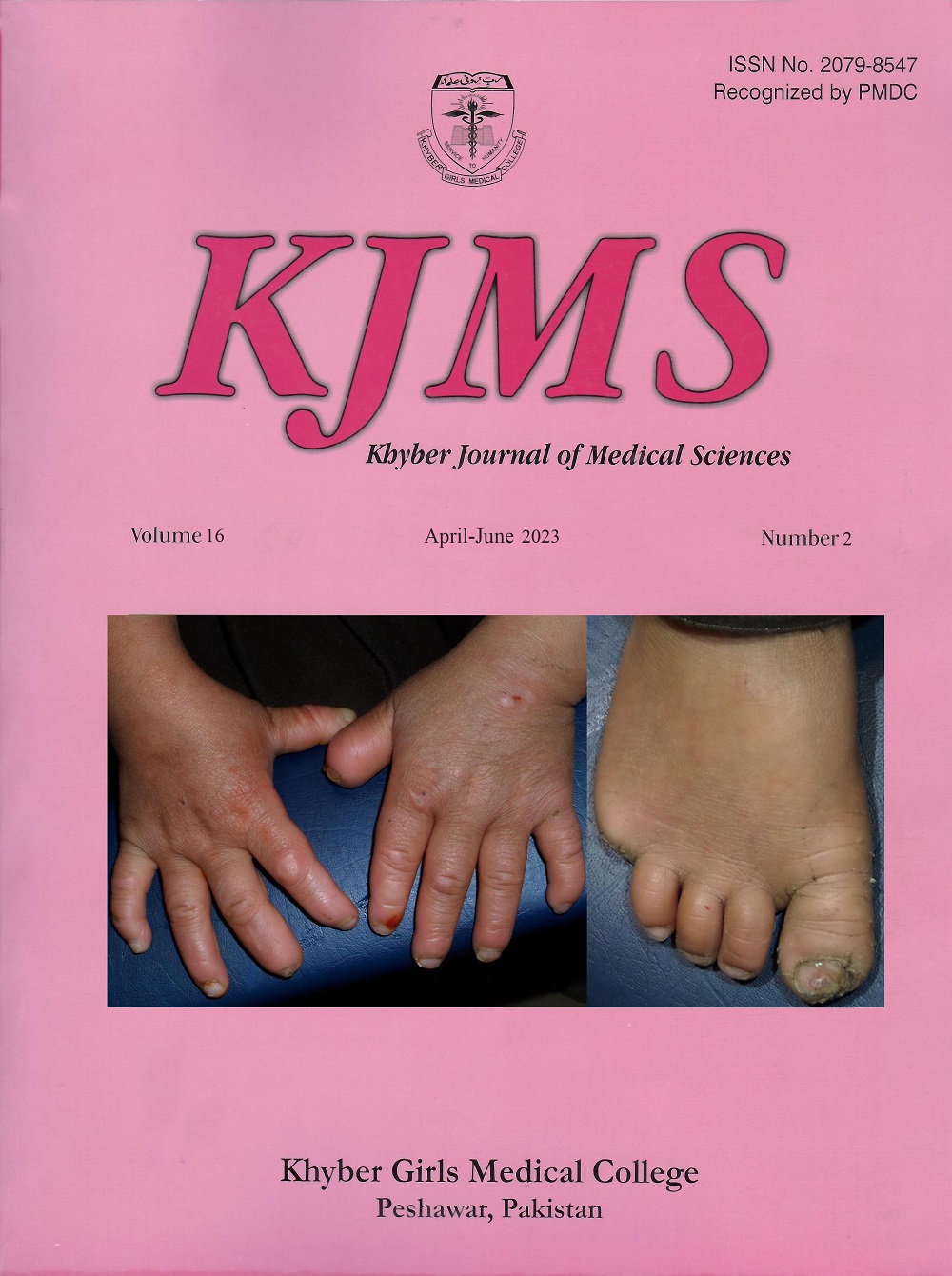
CONGENITAL INSENSITIVITY TO PAIN WITHOUT ANHIDROSIS
DOI:
https://doi.org/10.70520/kjms.v16i2.459Keywords:
CIP, SCN9A, Peripheral Nervous system, chromosome 2q24.3Abstract
Congenital Insensitivity to Pain (CIP) is a condition present from birth that inhibits the ability to perceive physical pain. Affected individuals are unable to feel pain in any part of their body.
Although they feel discriminative touch, patients are unable to perceive what any person with a normal functioning sensory and autonomic nervous system would describe as painful. They are also unable to distinguish between extremes of both hot and cold temperatures. Congenital insensitivity to pain is considered a form of peripheral neuropathy because it affects the peripheral nervous system, which connects the brain and spinal cord to muscles and to cells that detect sensations such as touch, smell, and pain. We report a case of a Congenital Insensitivity to Pain in a 6-year-old boy.